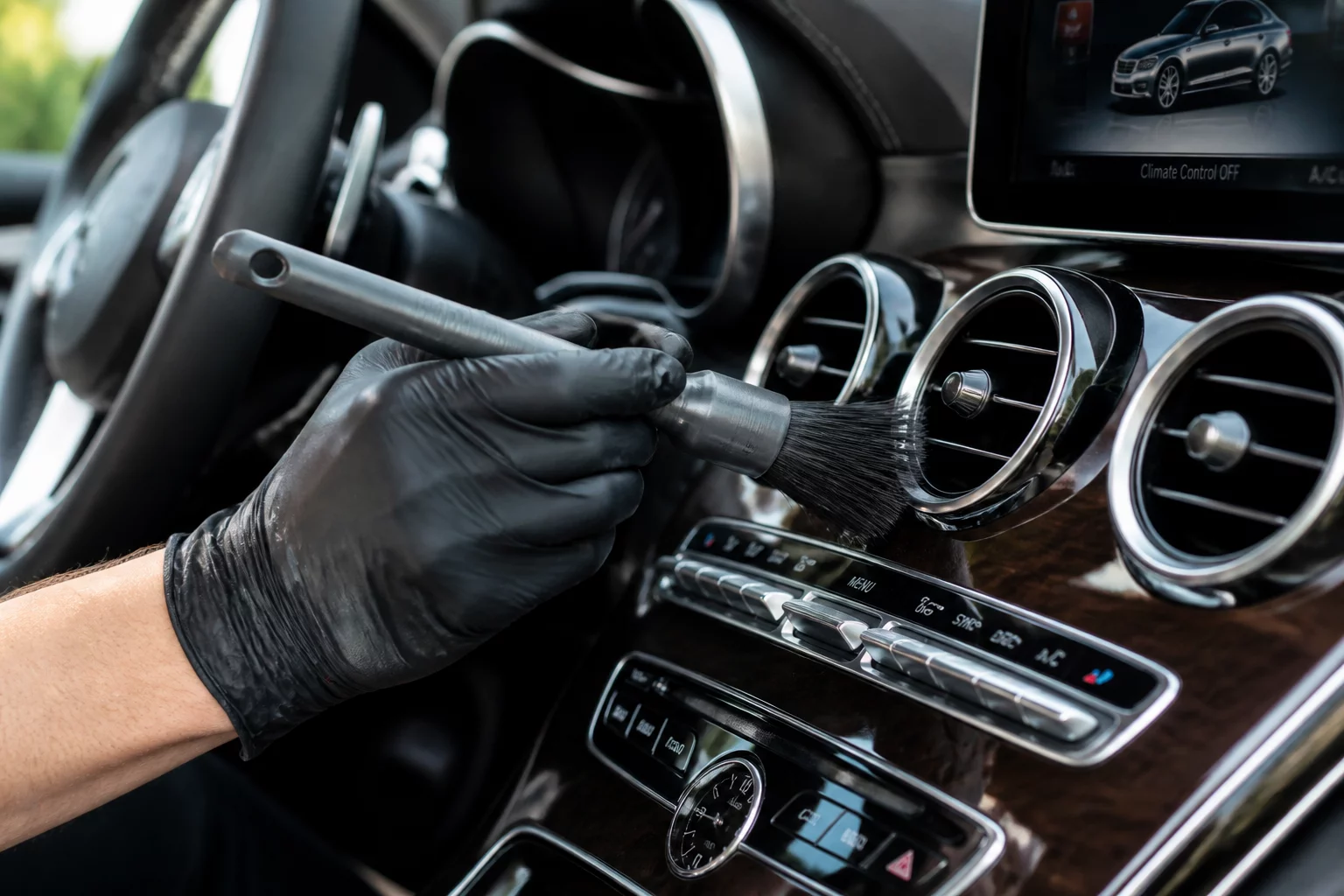
Most car owners spend hours cleaning paintwork while neglecting the cabin space where they actually spend all their driving time. A truly detailed vehicle cockpit requires more than a quick wipe with an all-purpose towel. Dirt, body oils, pet hair, and airborne pollutants settle into textured plastics, fabric fibers, and perforated leather surfaces. Adopting a methodical top-to-bottom strategy restores the cabin to a fresh, showroom-grade standard without damaging delicate electronic displays or modern matte finishes.
1. Execute a Top-to-Bottom Dry Extraction
Introducing liquid cleaners before thoroughly removing dry debris creates muddy streaks inside carpet piles and air vent louvers. Always start with a dry vacuum pass and targeted mechanical agitation:
- Clear dashboard dust first: Use a soft boars-hair or synthetic detailing brush to sweep air vents, switchgear crevices, and instrument panel surrounds while holding a vacuum nozzle an inch away to capture dislodged particles.
- Dislodge embedded carpet sand: Agitate floor carpets and floor mats with a stiff nylon brush or rubber pet-hair tool to pull trapped quartz particles to the surface before running a high-suction crevice attachment.
- Slide seats along rails: Move front seats fully forward and fully backward to expose hidden crumbs and lost debris accumulated underneath seat brackets.
2. Safe Plastic, Vinyl, and Modern Screen Cleaning
Modern vehicle interiors feature sensitive touchscreens, piano black accents, and soft-touch textured polymers that scratch easily under abrasive towels. Aggressive household solvents or heavy silicone dressings attract excessive airborne dust and create blinding windshield reflections in direct sunlight.
Apply dedicated interior cleaners directly onto a plush microfiber cloth rather than spraying them onto the dashboard. This prevents aerosol mist from settling behind instrument cluster lenses or inside sensitive electronic climate buttons. For digital gauge clusters and infotainment displays, use dedicated glass cloths lightly dampened with pure distilled water or optical-safe glass cleaner without ammonia.
3. Preserving Coated Leather and Synthetic Vinyl Seats
Almost all modern automotive leather seats come treated with a durable polyurethane topcoat from the factory. Traditional heavy oils and thick saddle soaps cannot penetrate this coating, leading to greasy residue that catches dirt and accelerates bolster wear.
Clean leather upholstery with a pH-neutral cleaner agitated with a soft-bristled horsehair brush to loosen oils trapped in micro-crevices and stitching seams. Wipe dry immediately with a clean microfiber towel. Once the surface is completely dry, apply a dedicated water-based leather conditioner that contains UV inhibitors to protect against sun fade and premature cracking.
4. Eliminating Streaks on Interior Windshields
Interior automotive glass frequently develops an oily haze caused by vinyl outgassing in hot weather combined with HVAC moisture. Standard single-pass towel cleaning often smears this film across the glass surface.
Adopt a two-towel glass cleaning method. Spray a dedicated automotive glass cleaner onto a tight waffle-weave microfiber cloth to break down oily contaminants. Immediately follow with a completely dry, lint-free microfiber towel to buff the glass dry in straight vertical passes on the interior and horizontal passes on the exterior. This technique highlights instantly which side has any remaining haze.
Professional Pro-Tip
Never apply oily gloss dressings to pedals, steering wheels, or transmission shifters. Keep functional contact points dry and clean with mild degreasers to ensure maximum tactile grip and driving safety.