Most clear coat scratches and spiderweb swirls originate not from road hazards, but from improper contact during routine washing. When dirt particles sit on automotive paintwork, dragging a sponge across them acts like fine sandpaper. Adopting a methodical detailing workflow eliminates this abrasive friction before mechanical contact ever occurs.
1. Wheel and Tire Decontamination First
Brake dust consists of sharp metallic shards and baked-on carbon deposits. Always clean the wheels, tires, and wheel arches before touching the vehicle body panels. This order prevents brake particulate matter from splashing back onto clean paintwork later in the process.
- Spray dedicated iron-dissolving wheel cleaner onto cool, dry alloy surfaces.
- Agitate the barrel inner recesses with a flexible soft-bristle wheel brush.
- Clean the tire sidewalls thoroughly with a citrus degreaser to strip spent dressings.
- Rinse each wheel arch thoroughly under high pressure before moving forward.
2. The Touchless Pre-Wash & Snow Foam Stage
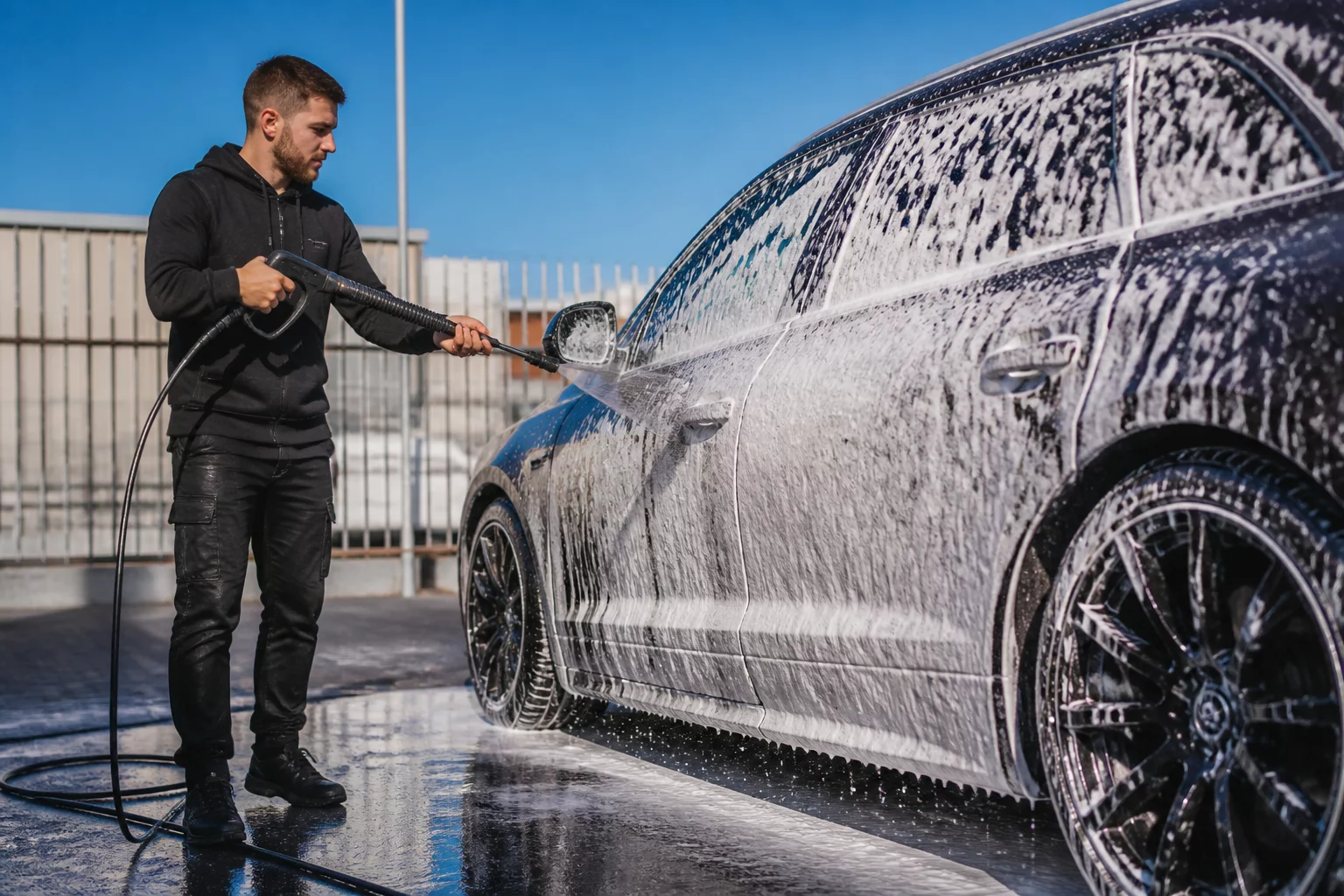
Direct mechanical contact should never be applied to a dusty vehicle. The pre-wash stage chemically softens and encapsulates heavy road film, loose soil, and bug residue, lifting them away from the finish safely.
Apply thick snow foam through a calibrated foam cannon starting from lower rocker panels and working upwards towards the roofline. Let the dense suds dwell for five to seven minutes without allowing them to dry in direct sunlight. Rinse the loosened contamination completely using overlapping horizontal pressure washer sweeps.
3. The Two-Bucket Contact Wash Protocol
To safely complete the contact wash, prepare two 20-liter buckets fitted with bottom grit guard inserts. One bucket holds clean warm water mixed with pH-neutral shampoo, while the secondary bucket contains fresh rinse water.
- Dip a plush microfiber wash mitt into the soapy solution and begin washing from the roof down.
- Move in straight, overlapping lines rather than circular rubbing motions.
- Rinse the soiled mitt in the plain rinse bucket against the grit guard grid after every single panel.
- Squeeze out excess trapped grit before recharging the mitt in the soapy bucket.
4. Safe Drying Without Friction
Water left standing on paint deposits dissolved minerals and creates stubborn calcified water spots. Traditional chamois leathers cause severe drag and hold dangerous debris against paint finishes.
Instead, lay an ultra-plush 1200gsm twisted-loop microfiber drying towel flat onto each panel, gently patting it or drawing it across without downward pressure. Pair this step with a mist of quick detailer spray to act as a lubricating drying aid while boosting slickness and gloss.